Saturday, 19 January 2013

It was 30 years ago today...

Beginning an occasional series reminding me if no one else what I was up to in 1983.  University, Leiwsham, just moved into hall of residence.  Losing the girlfriend of two years, discovering new music.  Boldly not doing all those traditional university things.

January 1983 seems like an alien world now.  It was monochrome, all washed out semitones of minimal colour in the People's Republic of Greater London.  Walking round the streets and markets of Lewisham, Deptford, New Cross, Greenwich, all seemed somber, subdued and depressed.  Or maybe that was just how I felt.

For the first time in ages I had nothing planned to do on a Saturday.  I blew the time going into Lewisham and buying a Joan Baez album.  What a total waste of money that was.  Never found her voice anything other than grating so I'm not sure why I parted with the cash in the first place.  I wanted something more gritty (a few weeks later I did buy something a whole lot more gritty, Dylan's overlooked masterpiece Shot Of Love, although I didn't appreciate it at the time).
 I want something more gritty because the night before I had spent a frustrating twenty minutes trying to contact the woman I thought was my girlfriend.  She was, it seemed, nowhere to be found although he roommate was located and fronted up to me that she would pass on the message that I was trying to contact her and no doubt she would ring me the next day.  She did but it wasn't what I wanted to hear.  Dylan's song, "In The Summertime" on Shot Of Love has the melancholy edge of what I felt for the rest of that weekend.

Much has been made this week of the start of BBC breakfast television.  I first saw it on Thursday 20 January 1983 having stayed up the entire night.  I should have been reading my newly acquired copy of The Theory Of Evolution by John Maynard Smith, but I wasn't.  I was mourning the end of my relationship, talking to friends both old and new and trying not to consider what my next move might be in the great lottery of life.  Actually, it was to sit through two hours of Dr Robert Spicer on plant palaeontology, followed by a practical session in the afternoon.  Dr Spicer, now Professor Spicer of the Open University, I apologise profusely for being so tired and nearly falling asleep during your lectures.  It wasn't you.  Honest.
I stopped off on my way back to digs to go into the Lewisham Centre, the shopping mall in the centre of Lewisham.  My haunts there were HMV, Our Price, Smiths and a small record stall at what I knew as the far end of the mall.  I would check out the new releases every Monday, sometimes at excessive length.  On this Thursday, I selected The Best Of The Doors, which I duly took back, put on my cassette player and fell asleep to.  That has been pretty much my reaction to The Doors ever since.

I never did read Maynard Smith's book.  I dipped into it and read some chapters but every time I sat down to read it in its entirety, I just couldn't.  It is forever etched into my mind and associated with the day I bought it.  Wednesday 19 January 1983.  It was the afternoon and a group of us biology students took the walk from Deptford where the biology department at Goldsmiths was, to the main site in New Cross where there was a bookshop.  We all got Maynard Smith's book, it was on the reading list, and after a bit of a chat we went our separate ways.  In between buying the book and getting The Doors the next evening I didn't sleep a wink, lost my girlfriend, attended my one and only university disco and had my world collapse around me.  Nothing dramatic then, just traumatic.  And it was my mum's birthday.

Actually, there was a better book on the reading list, Colin Patterson's Evolution, the Natural History Museum's guide to Darwin's great theory.  I met him a few years later when I took some fish fossils to the BM(NH) to be identified.  One turned out to be a new species, probably a new genus.  It wasn't mine, sadly, and it has not been described as far as I know, but it should be sitting in the draws of the Greenwich Borough Museum (or whatever it is called these days), gathering dust and awaiting the next person willing to sort the classification of fish fossils of the English chalk deposits.  It hasn't been done since the days of the Beatles first LP.

For shorthand, I named the fish Homonotichthys debora.  I suspect the name will not stick.
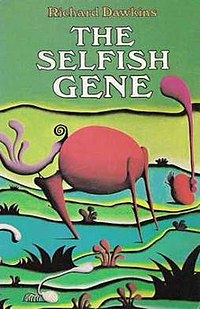
One name I used to hear quite a lot when things started to get a little less formal in the biology department was Richard Dawkins.  The Selfish Gene was still an exciting new idea, one that hadn't been cliched to death, and one that evoked a certain amount of the politics of the day.  We are talking of the interregnum between the Falklands War and the 1983 General Election.  Politics of the day was quite extreme.  My landlady in Lewisham told me about the Anti-Fascist riot there a few years before when her window had been smashed.  Looking out of that window the next day she saw a face looking back at her.  It was Spike Milligan.

Anyway, The Selfish Gene came up a number of times and I wish I had read it then and not waited a number of years, somewhat frightened of the reputation it had. I wasn't sure if I would understand it but when I tackled it I was ready.  It made sense and it made me understand not just the idea of evolution more clearly but the motivations of living organisms.  I had already read much of Stephen Jay Gould's polished prose and now found another biologist who could clearly write well, better perhaps than many novelists and poets.  By the time I read Dawkins's first book, I had read The Blind Watchmaker too.

 The events surrounding this week in 1983 so cloud my memory of what was going on that I had to look up some of the other things.  For instance, I had forgotten some of the music that was in the charts, perhaps because I wasn't chasing top ten hits but was foraging more serious sounds.  The naughty pleasures of Bucks Fizz were, perhaps, not for announcing in the student union bar.  But was it really the month for "Up Where We Belong", "Too Shy", "You Can't Hurry Love" and "The Cutter" by Echo And The Bunnymen.  Out of the top forty for 22 January 1983, I ended up with sixteen in my collection.  Well, I already had "Please Please Me" (a reentry, obviously) but the rest came in the next 30 years.  The following week's chart is worse - I have 21 of those.  The album chart is better.  I only have seven of those. 


Saturday, 5 January 2013

13:51 British Standard Time 21 December 1968

Go on, rack your brains and tell me you know what you were doing at exactly that time on that day.

Give up?

Thought you might.  It's nearly 44 years ago and let's face it, you've been asleep since then (or you weren't born, in which case there is a valid excuse).  But I know what I was doing.   I was holding one of these:
It is a model of the Atlas rocket on a spring loaded launch pad.  The rocket was hollow plastic and, you will note, has a rounded end designed to protect sensitive young eyes.  I was holding it because I had noticed something similar on the TV.

This:


The launch of Apollo 8.  Sadly the BBC coverage is gone, so here is the ABC (American) version which is about as close as we can get.  For a precocious five year old interested in things in general, the idea of anyone going anywhere near the Moon was fascinating.  Not that I understood much about what was really happening.  I was more interested in Teddy Bear comic (5d every Thursday) and the comings and goings at Pogle's Wood  at the time, but the sight, in black and white, of this immense rocket lifting off on a dragon's tail of flame caught my imagination unlike anything else I can remember.

1968 was the year I started school.  I had been briefed by mum on how to behave but mostly that wasn't necessary as I was always well behaved, never a rebel and one who conscientiously sat down to work or got my nose in a book.   I remember learning my alphabet and starting on the Ladybird reading scheme and being jealous of those that had got three or four books down the line before I joined.  I was soon catching up, sort of, because actually I was, and always have been, a somewhat slower reader than I felt I should be.  Same went for writing, but I blame that on being left handed.

Me on the swing, probably in 1969 - note the glasses, the toy gun at left and the rabbit hutch at right
In some ways it was the end of innocence.  Gone were the days when I could go across the road to play with our American Air Force family - they had returned to Texas andleft us with some memories and a garden swing upon which I would spend many a relaxed and thoughful hour. 

There are a couple of things I remember about Christmas 1968 outside of Apollo 8.  One is the red toy piano I got as a present.  I loved it and although I have loved music for much of my life, my entire musical talent began and ended on the single octave that that toy possessed.  Try as I might over the years, I just don't have any musical ability whatsoever.
A bit like my piano

The second is a pair of things really.  Two songs, "Ob-la-di, Ob-la-da" by The Marmalade and "Lily The Pink" by The Scaffold.  The former was the one I loved and played along with on Top Of The Pops, the latter one that I loved enough to be fully envious of whaen my brother's best friend said he had it on a single.  I didn't realise at the time how closely the two songs were related - each had a McCartney in the writing credits.  For old times sake, here they are:


I never bought either song.  Eventually I came across The Beatles version of "Ob-la-di, Ob-la-da" and was surprised it didn't sound like The Marmalade's version.  Not a big surprise really, because they had used the unreleased first version that The Beatles did. 

I got to meet one of the astronauts from Apollo 8, Jim Lovell, a few years ago.  Lovely man, still with a twinkle in his eye betraying his sharp intelligence behind the avuncular front.  I still reckon what my dad told me was a magical truth: the astronauts on the way to the Moon had been passed by a sleigh and a man in a red suit going the other way.


Wild Things Run Fast

I was looking at some bits and pieces that I wrote both twenty years ago and thirty years ago.  What I had done was write a rather detailed account of two years in my life and incorporated into it scraps of things that I had written at the tail end of my school career and the first two years at university.  I might reveal some of the contents but suffice to say that the two years marked my putting away childish things and growing into manhood.  I had come from a small village and been educated in a provincial town, so my journey into adulthood was partly precipitated by going to live in Lewisham, of all places, at the age of eighteen, to study at Goldsmiths College.

Virtually midway through my time there I moved from digs into one of the halls of residence.  At effectively the same time I got into Joni Mitchell's music in a big way.  Luckily I was alert enough to get a ticket, way at the back of Wembley Arena, to see her on the tour that she did to support Wild Things Run Fast, her 1982 return to poppy songs album.  This was my open door to her music.  Previously, by a couple of months, I had bought Ladies Of The Canyon, played "Big Yellow Taxi", then put the album away.  It didn't talk to me in the way I had hoped.

At the time I was listening heavily to Bob Dylan.  Over the previous few months I had gone through Blood On The Tracks, John Wesley Harding, Planet Waves, Desire and finally Street Legal.  In the whole of 1981 and 82 I had gone through Paul Simon's back catalogue (at least the bits that I could get hold of then) like a dose of salts.  I was a sponge, had the energy and desire to absorb the music and appreciate both melody and lyrics.  In those two years I went from ELO and Fleetwood Mac to Joni Mitchell and Neil Young via Jefferson Airplane and The Byrds.  I felt I had grown up and that is shown by the things I wrote at the time.  There is a tangible air of the eighteen year old country boy turning into a twenty-one year old city man.  I enjoyed my time in Lewisham.  I must go back to visit one day.

I bought Wild Things Run Fast having heard both "You're So Square" (the old Elvis song) and "Chinese Cafe" on Radio 1.  I suspect they wouldn't dream of playing Joni Mitchell any more, but in those days you could hear a great deal of mature music not aimed at the top 40, not so ephemeral either.  I was impressed one Sunday to hear the B-side of the then current Abba single "The Day Before You Came", the infinitely more interesting, to me, "Cassandra".  Anyway, I bought the album on January 4 1983, on casette, from Woolworths.  I heard it first at a friend's house, waiting for my then girlfriend to visit me.  I didn't play her the album as it wasn't her kind of music.  Nor was Dylan.  She preferred Cliff Richard but she did, strangely, have Pink Floyd's The Wall in her modest collection of tapes so it was from her that I gained my love of Pink Floyd (though not Cliff, funnily enough).

At the time we were in the process of breaking up.  So that day was her last visit to my house.  I don't recall what we did that evening.  It probably wasn't arguing because we didn't do that, just fell apart.  Luckily, I had loaned my tape of Blood On The Tracks to someone over the Christmas holidays, otherwise I would have played that one to death.  Who knows how many times I would have slipped deeply into depression listening to "If You See Her, Say Hello".  No, Wild Things Run Fast was sufficiently upbeat not to drag me down into the black depths.  And when I got back to University, well, everything changed.

One thing that changed was that I now moved in a new circle of friends.  One of them, who I called Eugene was properly called Martin Klucowicz, introduced me to his friend Robin who played Hejira to us.  From that moment I knew I had broken into appreciating Joni Mitchell, not just listening.

Wild Things Run Fast contains a song that everyone should hear: "Chinese Cafe".  It is elegaic, with a swirling, climactic chorus and pieces of the classic (and perhaps overdone) "Unchained Melody" built into it.  It also reveals, for what I think was the first time, that Mitchell had had a baby in the sixties that was adopted.  The song "Little Green" on Blue (1971) was about this girl I believe.  Luckily in the 90s, Mitchells mother and daughter were reunited.

My own personal tale did not end so well.  My girlfriend and I split a fortnight after I bought this album.  I got my copy of Blood On The Tracks back.  I was thoroughly miserable for a while.  For her, things went more happily.  She left me for the man she eventually married and I am happy that she did.  I took a little longer to find my wife and I wouldn't swap her for anyone.  Even though she doesn't like Dylan or Joni Mitchell either.

Sunday, 9 December 2012

Sir Patrick Moore

Not long ago I came across the news that Sir Patrick Moore has died.  For as long as I can remember he had been one of the constants in my life.  I encountered him first on the BBC coverage of the Moon landings and picked up on his eternal monthly programme The Sky At Night.  As a bit of a dilettante astronomer, indulging my habit less frequently than perhaps I would have liked, I did not catch every programme but when I did it was never less than a fascinating watch. 

I guess the show will go on.  In recent years there has been a co-presenter, Chris Lintott, who does a sterling job, if slightly staid.  That's not a criticism because in a way Lintott was Wise to Moore's Morecambe - the straight scientist to the amateur eccentric.  Moore was never going to be just a presenter, just an astronomer because he was never just anything.  I think anyone who came through the war as he did saw things a lot more differently than those of us born into the concrete and asphalt world of the post-war dream. 

Over the years, as you might expect, I picked up a number of Patrick Moore books.  One I recall was Can You Speak Venusian? which somewhat inspired my interest in the skeptical side of things, killed any incipient beliefs I might have had in the Von Daniken/UFO world and made me a more critical thinker.  The book itself is the usual rapid and entertaining romp through some of the weirder beliefs on the fringes of science and pseudoscience.  Others have covered much of this ground in more detail, or more academically, with footnotes and references, but this book is entertaining and worthy.  It should be up there on the skeptics reading list along with The Demon Haunted World and Unweaving The Rainbow.

Inevitably too there were the more serious books on astronomy, the annual Yearbook (hat tip to my brother for getting me the first I ever had as a present for Christmas 1974), an edition of The Amateur Astronomer that is still a reliable source of information 20 years on, and many others.  Sometimes you didn't even notice that it had his name on the cover - you just took it for granted that it had to be.  It was astronomy, after all, and no one else wrote books like he did.

I shall not put any video clips here.  Search them for yourself because you will find so much to enjoy, so many hours of vintage TV from when TV was not thrust into your eyes but which you were invited to view.  The Sky At Night remained old fashioned because the sky will still be there tomorrow.  You don't have to rush it now.

In a way I had Patrick Moore in my blood from the moment I was conceived.  My dad tells me that he and my mum would watch The Sky At Night, then go outside to try to see what Patrick had just been talking about.  Lucky was I to have two parents who were both so enthused that when my enthusiasm flickered into flame, they knew where to point me to get the most out of the interest.  They point me towards Patrick Moore.

Saturday, 8 December 2012

Gonna change my way of thinkng

After books and albums, individual songs

1 I Feel Fine - The Beatles

I grew up with The Beatles.  Almost literally.  We had a radiogram, a vast plywood cabinet with a valve radio on the left, full of the sorts of dials that said Hilversum and Luxembourg, and a record player concealed by a sliding door on the right.  It was one of those record players that you could stack a bunch of singles on the spindle and sit back while they played in order, dropping with a dull thud onto the turntable.  It scared the hell out of me.

Dad got it about the same time he got me, so there were no records before the middle of 1963.  What we did have was a run of Beatles singles and EPs, She Loves You, I Want To Hold Your Hand, the Twist and Shout and All My Loving EPs, Can't Buy Me Love and We Can Work It Out.  We did have some other singles, including my all time favourite, Fuzzy Wuzzy Wuz A Bear (on orange vinyl, 78rpm) and other things like the theme from Fireball XL5 and the Flintstones (another on orange vinyl that met a sad end when I sat on it and cracked it).

I Feel Fine didn't enter my consciousness until the sixth form when the BBC showed a season of Beatles movies over Christmas 1979.  I watched the Shea Stadium film and heard I Feel Fine there and on Radio 1 a day or so later.  I couldn't get it out of my head (I'd had a similar reaction to Nowhere Man a few years before) and decided, in the way that you do, to hear some more Beatles.  It led to buying Magical Mystery Tour a few weeks later and the rest, as they say, is history.

2 Refugee - Tom Petty & The Heartbreakers

Having listened to a whole range of stuff from 1980 up to 1985, I think I was ripe for discovering Tom Petty, so to speak.  I hadn't knowingly heard of any of his songs to this point, although I did see the video for Stop Dragging My Heart Around in about 1981 but didn't pay it much attention.  After the UK end of Live Aid had ground to a halt, the US end got in full swing and the first act post Wembley was Tom Petty & The Heartbreakers.

My first impression was of how weird he looked.  My second impression was how great the song was.  I haven't changed that opinion since.  Refugee is a great song and the Live Aid version was, and perhaps still is, my favourite version of it.  Having seen him live twice (once backing Dylan and once on his own tour), I can confirm he is a consummate performer and definitely one to go and see.  Oh, and he has a sense of humour, which is a good thing in the Sellar and Yeatman meaning of the phrase.

3 It Makes No Difference - The Band

The BBC used to have a themed night of rock music on BBC2 once a year.  One year they showed The Last Waltz.  I had already heard of The Band, and had a couple of albums by them, but I didn't listen to them much because they didn't quite connect with me.  I think I wanted something a bit more rocky at the time and this was quite old fashioned music played in an unassuming and modest way.  The Band did not shout look at me.  They whispered come inside and have a listen.

It wasn't until I saw the film of their 1976 farewell concert that I "got" The Band.  The interview sections certainly helped.  What perhaps helped even more was this song.  It is one of the rare love songs they recorded.  It's a tear jerker, sung in the plaintive voice of Rick Danko.  The Band were five times blessed: they had three of the greatest voices of rock music, they had five of the greatest musicians, one of the greatest songwriters, had one of the luckiest breaks when they were invited to back Bob Dylan and got Martin Scorcese to film their break up gig.  The Last Waltz is the best concert film bar none that I have ever seen.  And this song is, in my opinion, the best bit of the entire show.

4 As Cool As I Am - Dar Williams

Try as I might, I cannot fnd the original, more rocky version, of this song on YouTube.  So I've had to put an acoustic version on instead which slightly negates what it was that drew me to the song in the first place.  It is quite a bouncy little number, folky rather than country though I discovered it through the defunct music channel CMTEurope.  It's also rather ambiguous, deliberately so in places.  Make your own mind up.

Dar Williams is moderately successful in the US and little known in the UK.  No hits, no albums that have more than scraped into the bigger record stores, but she deserves better, I think, because she writes intelligent songs, songs that have a point other than to sell songs.  Therefore she has no chance of being successful, you'd think.  Well, I can't see her having a hit but you never know.  Stranger things have happened, but with the charts pretty much made up of forgettable pieces of fluff, and the odd bit of grit, it's unlikely. 


5 IDTTYWLM - Loudon Wainwright III

Even worse that the Dar Williams clip, the one I wanted wasn't on YuTube either, and nor is one of the great Loudo playing and singing this song available.  Instead, you have the album version, played on piano, rather than the fantastic guitar arrangement that I first heard on the Old Grey Whistle Test in 1983.  I include this song here because it just lit up my laughter neurons at a time when I wasn't finding too much to laugh about and I feel I can alwys go back to it and get that same warm and fuzzy feeling each and every time I hear it. 

Loudon Wainwright has been a very productive man: singer, songwriter, new Bob Dylan, actor (in MASH no less), wit, raconteur, husband to a famous folk singer, father to two more singers.  How does the man fit it all in a still have time to make jokes.  Find and listen to his Talking New Bob Dylan, then go and buy the album. 

I think humour is very important.  I'm glad there is someone who makes funny songs out of the grim reality of modern life.

Honorary mention

Saturday, 1 December 2012

Albums that changed my life

Here are five albums that changed my tastes in music and  my outlook on life.

1.  Magical Mystery Tour - The Beatles

I had grown up with The Beatles.  My dad liked them and had a number of the early singles and EPs and I remember collecting the Yellow Submarine bubblegum cards from the shop over the road.  We watched A Hard Day's Night and Help! when they were on the TV.  Then I stopped and it was the BBC showing all the Beatles films in one week that reawakened me.  Emboldened, I went around the record shops to find the one I wanted to listen to first.  The one I chose was Magical Mystery Tour because I recognised many of the titles.

Boy was I in for a surprise.  This isn't a cosy, moptop pop album.  It is full out weird from start to finish.  I had heard nothing like it and it truly took me to another place entirely, away from the conventional rock and pop I was hearing in the charts.  The first songs I gravitated towards were "Hello Goodbye" and "Your Mother Should Know" but the ones that fascinated me were "I Am The Walrus" and "Baby You're A Rich Man".  It took me a long time to work out how to do what The Beatles did here.  At least I did it by pure thought and without the help of the underground chemical industry.


2. Blood On The Tracks - Bob Dylan

I had been listening to Dylan for about a year before I bought this album in the autumn of 1982.  HMV were doing some sort of promotion in their shops and several Dylan albums were reduced in price.  I knew the reputation of the record so I bought it.  I first heard it while lying back in the bath at my digs.  All I know is that when I got to the end of the first track I said, aloud, to myself that if the rest of the album were as good, I was in for a real treat.

Mind you, it is hard to be as good as "Tangled Up In Blue" across ten tracks but Dylan almost did.  In many respects this is the perfect album.  The pace and texture of the songs, mostly simply played with acoustic guitars and subtle rhythm sections, has enough variety to keep the ear from going numb.  The melodies are subtle, twisting, delightful, and the lyrics are caustic and biting in the main.  Over familiarity means, and the shuffle button on my MP3 player, means that this isn't an album I listen to as a piece so often, but it is one that I can return to and find still fresh, still interesting.  And "Tangled Up In Blue" is a true masterpiece.  That song leaves me breathless at the end, as I should imagine it did Dylan himself after the frenetic harmonica solo that plays the song out.

Other standouts for me include the acidic "Idiot Wind" and the soothing "If You See Her, Say Hello".  Dylan's marriage at the time was falling apart and the songs reflect it.  If he has ever been so naked on the grooves of a vinyl release then I don't remember it.  There is no way you can miss his pain, nor the sheer humanity of his response.  Unlike so many other break up songs or albums, which usually look back wistfully with a touch of bitterness, Blood On The Tracks smells of revenge.  He doesn't say it, although "Idiot Wind" gets close, but Dylan wants to get his own back.  I don't know what happened in the marriage, and probably I don't, but the vengeful Dylan of "Positively Fourth Street" and its ilk from ten years before is returned and taking it out on the mother of his children.

Standouts are most of the songs, but most especially "Tangled Up In Blue" and he's still playuing it (see this video from 2012).


3 Hejira - Joni Mitchell

Like Blood On The Tracks, this is a stark album with little that might be called pop on it.  It is also long and wordy and utterly brilliant.  Forget the early Joni Mitchell, the folky.  This is the epitome of Joni Mitchell in my opinion.  It distills the folk narratives, her growing fascination with jazz and the idea that sparsity is most often more interesting than kitchen sink arrangements and production and supports it with alluring and interesting songs.

The standout songs are the opener, "Coytote", "Amelia" (ostensibly about the pioneer female flyer Amelia Earhart) and "Song For Sharon".  The songs dissect relationships through the idea that humans are restless beings, always moving on.  Mitchell does this from both sides of the gender divide.  "Coyote" has the theme of the predator and its prey - male and female respectively in this case.

The cover has a road on it for a good reason.  The album was written on the road and has travel running as blood through its veins.  It does not sit still.  Its feet are eager to get to the next destination.  I was lucky to be introduced to it at university and played in endlessly for months before playing it to anyone who would sit and listen.  I hope I turned some people on to Joni Mitchell as a result.


4 Lone Justice - Lone Justice

I had never heard a note by Lone Justice before I bought this album.  I got it purely on reviews alone and I was not disappointed.  Just like the Dylan album above, I can remember the first time I listened to it.  I sat through the first couple of songs but then pricked my ears up well and truly when I heard the third, "Ways To Be Wicked", and it just kept going.  This album is just stunning and it was the first time that I had thought of country as a music form I could listen to.

Not that Lone Justice were strictly country.  Their's was a more new wave version of country and they sure rocked when they wanted to.  And their were tender songs too, especially "Don't Toss Us Away".  But already there were the signs, if I could have read them, of their own downfall.  "Sweet Sweet Baby" is corporate rock with a punk-country flavour and is a forerunner of the second Lone Justice LP, Shelter.  By then, lead singer Maria McKee was enthralled to Waterboys/U2 big music and Christian themes.  Oh, dear.

So this is the purest mixture of Lone Justice you can get legally, although some early live bootlegs capture the real legend of the band and tell you why they were hot property, and why so many were let down.  And if you can get to see some of the live clips on YouTube of Lone Justice, do so, because they show more of a band than the 1986 Shelter vintage act that was pretty much Maria McKee solo in all but name.

Some years later, I did get into the sort of country act that this album bred: Mary Chapin Carpenter, Lucinda Williams and Kim Richey for example.  Although they don't appear to owe too much to Lone Justice, perhaps they do, because the idea of a rocking country female singer wasn't one I can see before 1984.

My favourites here are probably "You Are The Light" and "Ways To Be Wicked".   But I offer you a live "Don't Toss Us Away" because it was the song that opened that particular door for me.

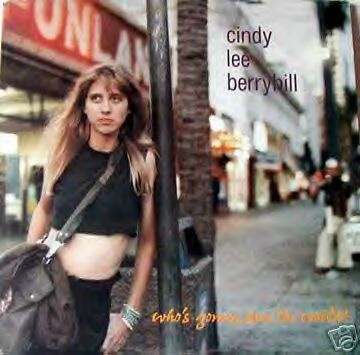
5 Who's Gonna Save The World - Cindy Lee Berryhill

OK, I think you knew at least three of the first four artists, but if you know this one then you are doing well.  Not that you should, of course, because obscurity is pretty much her middle name, and hits are certainly not associated with her.  I think I remember hearing her once on the radio and pretty much nothing else.  I came across one of her albums by accident in the Virgin Megastore in Oxford Street when looking for something else, not knowing she had even released anything in the last five years.  Not that there's that many Cindy Lee albums to go chasing down.  About half a dozen in a career spanning the better (or worst) part of a quarter century. 

But I urge you to listen to this one.  It is brilliant.  I kept playing it to friends who, as usual, weren't that interested in it to start with, but it has such wit, such verve and such a quirky style that it is nothing short of a masterpiece in my humble opinion.  And wit is truly it's defining quality.  This is like the early Dylan comedy songs spiced with a bit less stand up comedian routine than those songs but still played for fun rather than for serious effect.  Cindy Lee Berryhill deserves greater recognition.

Stand out tracks are the title track, "Damn I Wish I Was A Man" and "She Had Everything" which is a bit like "Save The Life Of My Child" by Simon & Garfunkel but not much.  What I took from this album was its energy.  Later releases became less energetic, shall we say, and much more intriguing for their musical style.  Anyone who can write a song called "Radio Astronomy" deserves an award so if no one else will, I shall.  Cindy Lee Berryhill, have a certificate for the greatest song about astronomy in wavelengths other than visible light.  There you go.  Keep the speech short, the commercial break is coming up.

Her career seems, from this side of the pond, to be about playing in small venues and looking after her severely ill husband, the rock writer Paul Williams.  Visit her blog about herself and his travails.  It is certainly moving.  Paul Williams was one of the most perceptive writers on Dylan.


Five albums, five artists.  I could have chosen many more (so some of the contenders who didn't make the cut include Sound Of Silence by Simon & Garfunkel, After The Goldrush by Neil Young, Music From Big Pink by The Band, Relics by Pink Floyd and Suzanne Vega's eponymous first album.  And so many more.

Sunday, 28 October 2012

Books that changed my life

I thought I'd do a list of the five books that opened my eyes scientifically.  These aren't textbooks although I could have listed ten of those.  These are books that you can read quite comfortably.

1  The Pleasure Of Finding Things Out - Richard Feynman
A pleasure of a short book in the authenitc voice of a pioneer of science from the last century.  If you want to understand science as a process, this is the book to go to.  Superb in its brevity and depth.

2 Unweaving The Rainbow - Richard Dawkins
 
It might be more fashionable to mention others of Dawkins's works, but this one is the one that encapsulates his almost poetical thoughts on science itself, rather than evolution or creationism or the more technical works.  Dawkins himself reads as easily as any writer of fiction.

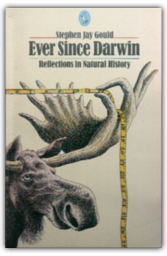
3  Ever Since Darwin - Stephen Jay Gould

I could have chosen any one of Gould's books but I chose this since it was the first time I read him.  He got more verbose and perhaps a little too long winded towards the end, but there was no stylist writing in science better than him at the time, roughly the mid-70s through to 2000.

4 The Cosmic Connection - Carl Sagan

This was the first grown up science book I ever bought, age 11.  Surprisingly, I found it in the local Woolworths - I certainly had not expected that result.  It was a bit much at the time, I wasn't experienced in science sufficiently to follow all the examples, but it astounded me that there was so much I had yet to learn.

5 The Life Sciences - PB & JS Medewar

I read this at an influential time in my life, sixteen, on the threshold of O levels and dating a girl whose father was the chief scientist in the UK.  Again a real eye opener, showing that there was so much in my chosen field that I had yet to encounter.  Another stylish writer too.

 I realise many people are not interested in science, which is a shame, but were they to pick up some of the foregoing books, I am sure they would come to realise that what they have missed is immense and awe inspiringly wonderful.