I grew up with The Beatles. Almost literally. We had a radiogram, a vast plywood cabinet with a valve radio on the left, full of the sorts of dials that said Hilversum and Luxembourg, and a record player concealed by a sliding door on the right. It was one of those record players that you could stack a bunch of singles on the spindle and sit back while they played in order, dropping with a dull thud onto the turntable. It scared the hell out of me.
Dad got it about the same time he got me, so there were no records before the middle of 1963. What we did have was a run of Beatles singles and EPs, She Loves You, I Want To Hold Your Hand, the Twist and Shout and All My Loving EPs, Can't Buy Me Love and We Can Work It Out. We did have some other singles, including my all time favourite, Fuzzy Wuzzy Wuz A Bear (on orange vinyl, 78rpm) and other things like the theme from Fireball XL5 and the Flintstones (another on orange vinyl that met a sad end when I sat on it and cracked it).
I Feel Fine didn't enter my consciousness until the sixth form when the BBC showed a season of Beatles movies over Christmas 1979. I watched the Shea Stadium film and heard I Feel Fine there and on Radio 1 a day or so later. I couldn't get it out of my head (I'd had a similar reaction to Nowhere Man a few years before) and decided, in the way that you do, to hear some more Beatles. It led to buying Magical Mystery Tour a few weeks later and the rest, as they say, is history.
2 Refugee - Tom Petty & The Heartbreakers
Having listened to a whole range of stuff from 1980 up to 1985, I think I was ripe for discovering Tom Petty, so to speak. I hadn't knowingly heard of any of his songs to this point, although I did see the video for Stop Dragging My Heart Around in about 1981 but didn't pay it much attention. After the UK end of Live Aid had ground to a halt, the US end got in full swing and the first act post Wembley was Tom Petty & The Heartbreakers.
My first impression was of how weird he looked. My second impression was how great the song was. I haven't changed that opinion since. Refugee is a great song and the Live Aid version was, and perhaps still is, my favourite version of it. Having seen him live twice (once backing Dylan and once on his own tour), I can confirm he is a consummate performer and definitely one to go and see. Oh, and he has a sense of humour, which is a good thing in the Sellar and Yeatman meaning of the phrase.
3 It Makes No Difference - The Band
The BBC used to have a themed night of rock music on BBC2 once a year. One year they showed The Last Waltz. I had already heard of The Band, and had a couple of albums by them, but I didn't listen to them much because they didn't quite connect with me. I think I wanted something a bit more rocky at the time and this was quite old fashioned music played in an unassuming and modest way. The Band did not shout look at me. They whispered come inside and have a listen.
It wasn't until I saw the film of their 1976 farewell concert that I "got" The Band. The interview sections certainly helped. What perhaps helped even more was this song. It is one of the rare love songs they recorded. It's a tear jerker, sung in the plaintive voice of Rick Danko. The Band were five times blessed: they had three of the greatest voices of rock music, they had five of the greatest musicians, one of the greatest songwriters, had one of the luckiest breaks when they were invited to back Bob Dylan and got Martin Scorcese to film their break up gig. The Last Waltz is the best concert film bar none that I have ever seen. And this song is, in my opinion, the best bit of the entire show.
4 As Cool As I Am - Dar Williams
Try as I might, I cannot fnd the original, more rocky version, of this song on YouTube. So I've had to put an acoustic version on instead which slightly negates what it was that drew me to the song in the first place. It is quite a bouncy little number, folky rather than country though I discovered it through the defunct music channel CMTEurope. It's also rather ambiguous, deliberately so in places. Make your own mind up.
Dar Williams is moderately successful in the US and little known in the UK. No hits, no albums that have more than scraped into the bigger record stores, but she deserves better, I think, because she writes intelligent songs, songs that have a point other than to sell songs. Therefore she has no chance of being successful, you'd think. Well, I can't see her having a hit but you never know. Stranger things have happened, but with the charts pretty much made up of forgettable pieces of fluff, and the odd bit of grit, it's unlikely.
5 IDTTYWLM - Loudon Wainwright III
Even worse that the Dar Williams clip, the one I wanted wasn't on YuTube either, and nor is one of the great Loudo playing and singing this song available. Instead, you have the album version, played on piano, rather than the fantastic guitar arrangement that I first heard on the Old Grey Whistle Test in 1983. I include this song here because it just lit up my laughter neurons at a time when I wasn't finding too much to laugh about and I feel I can alwys go back to it and get that same warm and fuzzy feeling each and every time I hear it.
Loudon Wainwright has been a very productive man: singer, songwriter, new Bob Dylan, actor (in MASH no less), wit, raconteur, husband to a famous folk singer, father to two more singers. How does the man fit it all in a still have time to make jokes. Find and listen to his Talking New Bob Dylan, then go and buy the album.
I think humour is very important. I'm glad there is someone who makes funny songs out of the grim reality of modern life.
Here are five albums that changed my tastes in music and my outlook on life.
1. Magical Mystery Tour - The Beatles
I had grown up with The Beatles. My dad liked them and had a number of the early singles and EPs and I remember collecting the Yellow Submarine bubblegum cards from the shop over the road. We watched A Hard Day's Night and Help! when they were on the TV. Then I stopped and it was the BBC showing all the Beatles films in one week that reawakened me. Emboldened, I went around the record shops to find the one I wanted to listen to first. The one I chose was Magical Mystery Tour because I recognised many of the titles.
Boy was I in for a surprise. This isn't a cosy, moptop pop album. It is full out weird from start to finish. I had heard nothing like it and it truly took me to another place entirely, away from the conventional rock and pop I was hearing in the charts. The first songs I gravitated towards were "Hello Goodbye" and "Your Mother Should Know" but the ones that fascinated me were "I Am The Walrus" and "Baby You're A Rich Man". It took me a long time to work out how to do what The Beatles did here. At least I did it by pure thought and without the help of the underground chemical industry.
2. Blood On The Tracks - Bob Dylan
I had been listening to Dylan for about a year before I bought this album in the autumn of 1982. HMV were doing some sort of promotion in their shops and several Dylan albums were reduced in price. I knew the reputation of the record so I bought it. I first heard it while lying back in the bath at my digs. All I know is that when I got to the end of the first track I said, aloud, to myself that if the rest of the album were as good, I was in for a real treat.
Mind you, it is hard to be as good as "Tangled Up In Blue" across ten tracks but Dylan almost did. In many respects this is the perfect album. The pace and texture of the songs, mostly simply played with acoustic guitars and subtle rhythm sections, has enough variety to keep the ear from going numb. The melodies are subtle, twisting, delightful, and the lyrics are caustic and biting in the main. Over familiarity means, and the shuffle button on my MP3 player, means that this isn't an album I listen to as a piece so often, but it is one that I can return to and find still fresh, still interesting. And "Tangled Up In Blue" is a true masterpiece. That song leaves me breathless at the end, as I should imagine it did Dylan himself after the frenetic harmonica solo that plays the song out.
Other standouts for me include the acidic "Idiot Wind" and the soothing "If You See Her, Say Hello". Dylan's marriage at the time was falling apart and the songs reflect it. If he has ever been so naked on the grooves of a vinyl release then I don't remember it. There is no way you can miss his pain, nor the sheer humanity of his response. Unlike so many other break up songs or albums, which usually look back wistfully with a touch of bitterness, Blood On The Tracks smells of revenge. He doesn't say it, although "Idiot Wind" gets close, but Dylan wants to get his own back. I don't know what happened in the marriage, and probably I don't, but the vengeful Dylan of "Positively Fourth Street" and its ilk from ten years before is returned and taking it out on the mother of his children.
Standouts are most of the songs, but most especially "Tangled Up In Blue" and he's still playuing it (see this video from 2012).
3 Hejira - Joni Mitchell
Like Blood On The Tracks, this is a stark album with little that might be called pop on it. It is also long and wordy and utterly brilliant. Forget the early Joni Mitchell, the folky. This is the epitome of Joni Mitchell in my opinion. It distills the folk narratives, her growing fascination with jazz and the idea that sparsity is most often more interesting than kitchen sink arrangements and production and supports it with alluring and interesting songs.
The standout songs are the opener, "Coytote", "Amelia" (ostensibly about the pioneer female flyer Amelia Earhart) and "Song For Sharon". The songs dissect relationships through the idea that humans are restless beings, always moving on. Mitchell does this from both sides of the gender divide. "Coyote" has the theme of the predator and its prey - male and female respectively in this case.
The cover has a road on it for a good reason. The album was written on the road and has travel running as blood through its veins. It does not sit still. Its feet are eager to get to the next destination. I was lucky to be introduced to it at university and played in endlessly for months before playing it to anyone who would sit and listen. I hope I turned some people on to Joni Mitchell as a result.
4 Lone Justice - Lone Justice
I had never heard a note by Lone Justice before I bought this album. I got it purely on reviews alone and I was not disappointed. Just like the Dylan album above, I can remember the first time I listened to it. I sat through the first couple of songs but then pricked my ears up well and truly when I heard the third, "Ways To Be Wicked", and it just kept going. This album is just stunning and it was the first time that I had thought of country as a music form I could listen to.
Not that Lone Justice were strictly country. Their's was a more new wave version of country and they sure rocked when they wanted to. And their were tender songs too, especially "Don't Toss Us Away". But already there were the signs, if I could have read them, of their own downfall. "Sweet Sweet Baby" is corporate rock with a punk-country flavour and is a forerunner of the second Lone Justice LP, Shelter. By then, lead singer Maria McKee was enthralled to Waterboys/U2 big music and Christian themes. Oh, dear.
So this is the purest mixture of Lone Justice you can get legally, although some early live bootlegs capture the real legend of the band and tell you why they were hot property, and why so many were let down. And if you can get to see some of the live clips on YouTube of Lone Justice, do so, because they show more of a band than the 1986 Shelter vintage act that was pretty much Maria McKee solo in all but name.
Some years later, I did get into the sort of country act that this album bred: Mary Chapin Carpenter, Lucinda Williams and Kim Richey for example. Although they don't appear to owe too much to Lone Justice, perhaps they do, because the idea of a rocking country female singer wasn't one I can see before 1984.
My favourites here are probably "You Are The Light" and "Ways To Be Wicked". But I offer you a live "Don't Toss Us Away" because it was the song that opened that particular door for me.
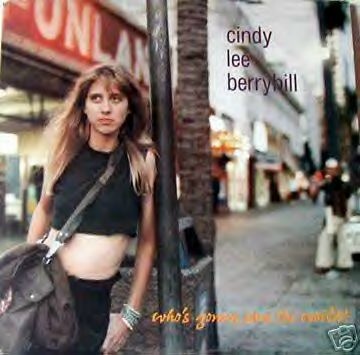
5 Who's Gonna Save The World - Cindy Lee Berryhill
OK, I think you knew at least three of the first four artists, but if you know this one then you are doing well. Not that you should, of course, because obscurity is pretty much her middle name, and hits are certainly not associated with her. I think I remember hearing her once on the radio and pretty much nothing else. I came across one of her albums by accident in the Virgin Megastore in Oxford Street when looking for something else, not knowing she had even released anything in the last five years. Not that there's that many Cindy Lee albums to go chasing down. About half a dozen in a career spanning the better (or worst) part of a quarter century.
But I urge you to listen to this one. It is brilliant. I kept playing it to friends who, as usual, weren't that interested in it to start with, but it has such wit, such verve and such a quirky style that it is nothing short of a masterpiece in my humble opinion. And wit is truly it's defining quality. This is like the early Dylan comedy songs spiced with a bit less stand up comedian routine than those songs but still played for fun rather than for serious effect. Cindy Lee Berryhill deserves greater recognition.
Stand out tracks are the title track, "Damn I Wish I Was A Man" and "She Had Everything" which is a bit like "Save The Life Of My Child" by Simon & Garfunkel but not much. What I took from this album was its energy. Later releases became less energetic, shall we say, and much more intriguing for their musical style. Anyone who can write a song called "Radio Astronomy" deserves an award so if no one else will, I shall. Cindy Lee Berryhill, have a certificate for the greatest song about astronomy in wavelengths other than visible light. There you go. Keep the speech short, the commercial break is coming up.
Her career seems, from this side of the pond, to be about playing in small venues and looking after her severely ill husband, the rock writer Paul Williams. Visit her blog about herself and his travails. It is certainly moving. Paul Williams was one of the most perceptive writers on Dylan.
Five albums, five artists. I could have chosen many more (so some of the contenders who didn't make the cut include Sound Of Silence by Simon & Garfunkel, After The Goldrush by Neil Young, Music From Big Pink by The Band, Relics by Pink Floyd and Suzanne Vega's eponymous first album. And so many more.
I thought I'd do a list of the five books that opened my eyes scientifically. These aren't textbooks although I could have listed ten of those. These are books that you can read quite comfortably.
1 The Pleasure Of Finding Things Out - Richard Feynman
A pleasure of a short book in the authenitc voice of a pioneer of science from the last century. If you want to understand science as a process, this is the book to go to. Superb in its brevity and depth.
2 Unweaving The Rainbow - Richard Dawkins
It might be more fashionable to mention others of Dawkins's works, but this one is the one that encapsulates his almost poetical thoughts on science itself, rather than evolution or creationism or the more technical works. Dawkins himself reads as easily as any writer of fiction.
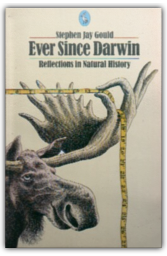
3 Ever Since Darwin - Stephen Jay Gould
I could have chosen any one of Gould's books but I chose this since it was the first time I read him. He got more verbose and perhaps a little too long winded towards the end, but there was no stylist writing in science better than him at the time, roughly the mid-70s through to 2000.
4 The Cosmic Connection - Carl Sagan
This was the first grown up science book I ever bought, age 11. Surprisingly, I found it in the local Woolworths - I certainly had not expected that result. It was a bit much at the time, I wasn't experienced in science sufficiently to follow all the examples, but it astounded me that there was so much I had yet to learn.
5 The Life Sciences - PB & JS Medewar
I read this at an influential time in my life, sixteen, on the threshold of O levels and dating a girl whose father was the chief scientist in the UK. Again a real eye opener, showing that there was so much in my chosen field that I had yet to encounter. Another stylish writer too.
I realise many people are not interested in science, which is a shame, but were they to pick up some of the foregoing books, I am sure they would come to realise that what they have missed is immense and awe inspiringly wonderful.
Since I am off to see Buzz Aldrin tomorrow, a little thought scintillates through my mind about two very different American heroes.
This week has seen the US Anti-Doping Authority release its evidence and reasons for castigating Lance Amrstrong as a cheat. He was, apparently, in the middle of the web of drug using and supplying and the evidence I have read suggests that the USADA was right. His behaviour, on the other hand, does not seem to me to be one of someone totally clean and innocent.
Lance Armstrong 1993
I have become heartily fed up of the never failed a drugs test claim. There was a sort of failed test in 1999 and retesting of samples from that year showed his blood contained EPO which wasn't testable then. Even when a test came in, it appeared that the scientist who developed the test was advising the cyclists on how to beat the test. Incredible. A shiny apple on the outside and a rotten core - I watched the Tour De France during those years and admired the skill and strength of the cyclists. It is a shame to know now that it was inflated by a chemist's lab.
And again in 2009 - been working out
The claim I just mentioned, about never failing a test, was exploded by the methods Armstrong apparently used to avoid being tested. It included dropping out of one event, filing travel plans on the day he travelled (through a third party management type set up) and not answering the door when the testers rang the bell. I get the vision of wiry cyclist and Sheryl Crow hiding under the kitchen table so as not to be seen. If he were so clean, he wouldn't have needed to do these things, would he?
I heard a pathetic interview with someone involved in professional cycling in Texas, Armstrong's home state. It was pathetic because it used the same tame excuses that Armstrong himself has made. He will continue to have his defenders but he will go to his grave knowing that his reputation is not for wonderful philanthropic things or defeating cancer (and I have seen one despicable comment on one website that we might not be able to accept all he says about his cancer), but for being the biggest sporting cheat so far uncovered.
The other hero was Neil Armstrong. To have made a contribution to history even more significant than peddling well (in more than one sense, Lance), Neil Armstrong was a duly modest man. I never met or saw him and can believe that he was driven and at times not a pleasant man to be with, though I have never actually heard such things. Of all the astronauts to have been chosen to be the first to stand on the surface of another planet/moon/asteroid/etc, he could not have been bettered. To have recognised that he owed it all to other people, that he was in the right place at the right time, etc, and to have consistently said so, that could give Lance Armstrong a severe lesson in how to be a better person. Perhaps to his family and friends, the cyclist is a wonderful person. I don't know that man. I just know the one who would not stick to the rules.
Neil Armstrong, off duty (sort of) in 1969
They say rules are there to be broken, though I don't know of any that do say it who agree with themselves when they are cheated out of a win, or some money. Rules are there to ensure we all have a chance to succeed. If we take it it is because we want to succeed, we want to try, we want to win. We don't have to break the rules to win. Cyclists now are slower, at least on the climbs, than they were ten years ago. Doesn't that say something?
In a couple of weeks I am off to Autrographica to see, amongst others, Buzz Aldrin. I've met him before, shook his hand, paid for his autograph and seen the look on his face when Brigit Nielsen leaned over his table to have a chat with him.
This time I am taking my granddaughter. After all, though she's not quite three, she probably won't have many opportunities to meet or even see someone who has walked on the Moon. There are only eight left and three will be at Autographica 12-14 October.
I'll stick any photos I take on this blog. The last time my granddaughter met anyone famous it was Upsy Daisy from In The Night Garden and she hugged and kissed her and tried to take her home. Buzz, here's your warning.
I used to love Horizon when it was on BBC2 on a Monday night and it was about science and not presented by a celebrity. I used to sit there with my mum and we'd watch it together. About half way through I'd ask her if she understood any of it and she would say a resigned no. My mum, you see, preferred soap operas to science. To each their own.
What my mum didn't do was stop me watching it, or Tomorrow's World or any other science programme that came my way. I am sure she never understood more than the opening credits but she dutifully sat there because she knew that was what I was interested in. And I took it all in, mouth agape and mind a sponge through my teenage years.
It was through Horizon that I met a thing called the Anthropic Principle. Briefly stated, as far as I understand it and I am sure someone will correct me, it says that the Universe is as the Universe is because if it were different then it wouldn't be the same. Oh, and it's that way because it suits us. And if you really want to get deeply into it, it is that way so that there must have been us to consciously view the Universe and therefore, in some strange quantumish sort of way, create the Universe. Confused. Don't be. I think it is twaddle.
Not the bit about the Universe being different if things were different. That is trivial and obviously true. No, it's the deeper bits. Those are based on what Richard Dawkins would probably label the as being based on personal incredulity. Since some of the fundamental (we think) constants (we think) of nature are as they are, then we get the Universe we get as a result. Fiddle with those and the whole house of cards tumbles spectacularly to the ground. The Universe lasts for a twinkle of an eye or nuclear fusion never gets going or something like that. The important point is, and I always wonder if anyone else gets this, there is only one Universe (if anyone goes on about multiverses I shall throw a sock at them) and only one planet with life so we don't really know whether life of any conceivable type could exist in any other conceivable universe. No, we just don't.
What we do know about life is that once it gets going it is pretty hardy. This planet has undergone a global snowball and countless meteorite strikes, losing many of the glorious species (I wish there were still trilobites) but life still goes on. NASA even managed to transport some snotty nose germs (by accident) to the Moon and back in the sixties and they were viable when they came back.
The central arguments for the Anthropic Principle rest on those constants. Do they really make so much difference if there is a tweak or two? Victor Stenger did the sums and says no and I am inclined to believe him. Why? Because the Anthropic Principle sounds like wishful thinking and it does so because those that most want it to be true shout loudest but seem to think the least. It leaves the realms of science and becomes a theological argument very quickly. And did it have to be human consciousness? What about my cats? Can't they be the conscious ones responsible for bringing all of this creation into being?
I reckon it is bad science when you only have one data point. When you have two, as my chemistry teacher always said when he plotted a graph on the board, you have a trend. Let's at least find some more examples of life before we take this idea seriously but what do I know? Sometimes you have to examine you own biases. And the Templeton Prize is awfully tempting and so much easier to win than a Nobel because much of what you have to say doesn't even have to be proved.
PS Before anyone should accuse me of not being fair, I've read more books on the AP than against it and I still don't believe it. I read Barrow and Tipler's increasingly incredible book (top picture) and disagreed vehemently back in 1989. Stenger merely told me why I didn't believe it. And it is shorter and bereft of theological nonsense. Omega point for goodness sake.
Every year about this time, when I tell people that I got into science because of the Moon landings, I get told that they were faked and no one has ever been there. Luckily, I've had the chance to do some things that those people haven't, although of course they could have done if they had wanted to.
The first of those is to watch the television coverage of the landings themselves, the raw footage that NASA recorded and which is easily available. Spacecraft Films have boxed the lot up in individual mission sets which you can order from the comfort of your own armchair. NASA have stuck much of it on the internet. Those edited down and overdubbed with narration clips you get on the documentaries on the Discovery Channel (other documentary channels are available), don't convey the full nature of what is available. Much of it is unremarkable, prosaic and mundane even, except that it was filmed 250,000 miles away.
I've heard how those excited by the conspiracy theory that we never went to the Moon have watched every inch of film and scoured every photo. If they have, they didn't do a good job of it. I've heard one those people going on about how the astronauts couldn't have taken such good photos under those conditions. Once again, NASA has opened the archives and you can see that the good shots made the glossy magazines, the rest still moulder because they were either documenting the science or were just plain no good.
The second thing is that you can actually meet the men who went to the Moon. I've been lucky over the last few years to have met Buzz Aldrin, Al Bean, Dave Scott and Gene Cernan who all walked on the surface, and Al Worden, Jim Lovell, Fred Haise and Tom Stafford who all went round it. Ask them if they went to the Moon and they will give you the true answer. Aldrin once backed up his answer with a fist. These are all highly intelligent, independent minded people. You couldn't keep a conspiracy of that magnitude under cover for that length of time.
Of the twelve who walked on the Moon, until a few weeks ago, nine remained. On the car radio ferrying my wife and I from Terminal 4 to the car rental pick up at Heathrow Airport on 26 August, I heard the news that Neil Armstrong had gone from that exclusive list. By noon that day it was old news but fresh to me since I had been in transit for fourteen hours. When I picked up a copy of the Observer that afternoon, the young women serving me said that her dad had mentioned that Armstrong had died but she hadn't known who he was. The greatest human endeavour ever and it is passing not only from living memory but from the memory we pass to coming generations. What are we doing?
Actually, it is the young who ask about the conspiracy and not the elder folks. The young did not live with it, get taken in by someone shouting the loudest and don't always stop to hear the evidence. Evidence, you see, gets in the way of a good story. Just as Lee Harvey Oswald shot John F Kennedy, Neil Armstrong was the first person to put a shoe print in the dust of a celestial body. The evidence is all there.
And part of evidence is this photo. It is the only one of Armstrong in full on the lunar surface. Whether Buzz was still in a snit about not being first out (as some have alleged) or the plans for the photos were really low down on the list of priorities, doesn't matter. It's a poor shot and was forgotten about for ages. It got back in the news the other week because of the fact that it was the only shot and it was just an accident that Armstrong was in it.
Just in case you think I was making it up about the quality of the photography, try this one. Please play spot Neil Armstrong with it (there is no prize aside from the satisfaction of a job well done): those gloved fingers still couldn't get all the photos right and they dind't belong to David Bailey. So, conspiracy folks, that's another piece of your "evidence" heading firmly down the tubes.
That won't stop many people believing in the conspiracy theory but at least no one has died as a result of this mistaken belief. And if you are still unconvinced, take a look at this site which has photographic evidence for Apollo on the way to the Moon.
Prime and back up crews for Gemini 8: Dave Scott, Richard Gordon, Charles Conrad and Neil Armstrong (three Moon walkers and one who merely orbited)
In the meantime, remember how brave you had to be to get in one of those spacecraft and allow yourself to be at the mercy of any of the millions of things that could have gone wrong. We should be thankful that all twenty-four of the travellers who went to the Moon came back alive, including the twelve who got to stand on the surface and gaze in wonder. That requires no weird belief, just the acceptance of eyewitness testimony.